The beauty of pastry lies in the fact that it is a very technical and time-sensitive genre of cooking. As opposed to certain types of cooking, a slight miscalculation of ingredients, temperature, or mixing time can completely alter the final product. This is why it is essential for new (and even experienced) bakers to practice and perfect their basic skills. When a baker has a solid grasp of the basics, they can rely on consistent results, comprehend recipes on a deeper level, and innovate without fear.
And if you don’t master the fundamentals, the “fancy decorating skills” and “fancy desserts” mentioned above will inevitably fall short. Master the basics, and you will be poised to tackle everything from a simple tart to a complex multi-layered cake.
What do ingredients do?
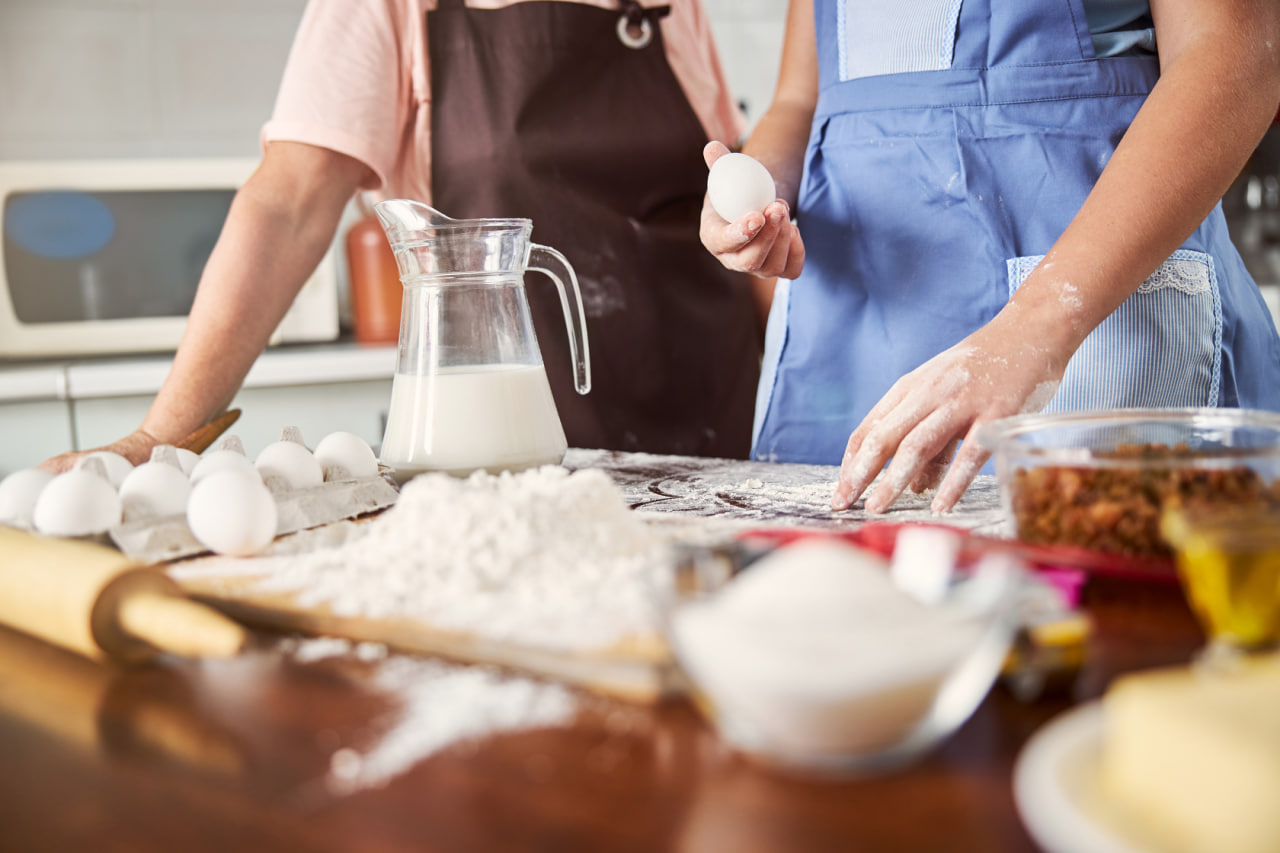
Every ingredient in a pastry has a particular job, and the ingredients affect the texture, structure, and taste of the final product. Knowing what each ingredient does is the key to developing your pastry powers.
Flour: Gluten in the flour provides structure. But some flours are better suited for certain things. Pastry flour will give you a delicate dough, while bread flour will give you a more elastic one.
Fat: Adds flakiness, tenderness, and flavor. Butter, margarine, and oils contain varying amounts of water and have different melting properties that influence the texture of the dough.
Sugar: Contributes to sweetness, enhances browning via caramelization, and contributes to texture, either as a tenderizer or stabilizer.
Eggs – Binders, leaveners, add richness and color. Whole eggs, egg yolks, and egg whites serve different functions.
LIQUIDS. Water, milk, or cream add moisture to the flour, dissolve the sugar and salt and control the consistency of the dough and the formation of gluten.
Understanding what each ingredient does allows bakers to modify recipes, resolve issues, and make deliberate substitutions while still delivering the desired outcome.
Understanding Yeast Dough and Batter How to Make Master Yeast Dough All-Purpose Batter
The basic ingredients of pastry include doughs and batters, such as shortcrust, puff, choux, sponge and basic cookies. All have their own method and use.
Shortcrust Pastry: This type of pastry aims for tenderness and crumbliness. These are accomplished by using cold fat cut into the flour and minimal manipulation of the dough to prevent it from becoming tough.
Puff Pastry: Must be rolled and folded to separate fat from dough, creating layers. Needs to be precise and kept cool.
The third type of dough is choux pastry, which creates a light and airy, hollow center in pastries such as éclairs and profiteroles. The dough needs to be cooked before baking and steam from eggs is needed to help them rise.
Sponge and Genoise: Structure provided by egg-based leavening. Folding and whipping is done minimally to avoid deflating cake, but enough to assure uniform structure.
Mastering those basic doughs helps you develop your technique, get a feel for the tempo of mixing, resting, and manipulating dough, and acquaints you with the various textures dough can have — all valuable when making other, more involved pastries.
Accuracy of Measurements and Temperature
A key thing about pastry is that it’s not like most other types of cooking, where a slight fluctuation in weight, temperature or mix-time won’t affect the end result too greatly.
Weigh ingredients: To ensure accuracy, use a digital scale to measure ingredients, especially the flour and fat. Small variations can make a difference to the final product.
Regulate temperature: If you want flaky dough, you need to use cold ingredients. Conversely, there are times when you want to use warm ingredients. From butter temperature to oven preheating to refrigerating ingredients, it all makes a difference.
Don’t Over- or Undermix: Over- or undermixing affects the final texture and volume of the cake. The mixing time, resting time, and baking time is just as crucial as the temperature.
Maintaining discipline over these variables guarantees consistent and professional outcomes.
Mixing and Handling Techniques
Mixing, folding and dough/batter handling must be done correctly. There’s a reason for every mixing method and it has an impact on the final texture and structure of a baked good.
Creaming: This involves mixing fat and sugar together to introduce air, which helps with aeration and tenderness. Be sure to mix properly for uniform aeration.
Folding: For blending in beaten or whipped mixtures to prevent their collapse, which is important in a sponge cake or a mousse.
Kneading: to work yeast doughs. Needed to get the dough to be elastic rather than hard when the kneading is done at the right speed and pressure.
Cutting and Laminating: Gives puff pastry a consistent flakiness by spreading out the butter between layers of dough.
Doing these over and over develops muscle memory, speed and accuracy.
A few notes about leavening and structure.
Leavening agents help your pastry rise. If you’re a novice, you need to know the various options:
Chemical Leavening: These are products like baking powder and baking soda which release gas when baked. Measuring and mixing correctly will also help maintain consistency.
Biological Leavening: Carbon dioxide from yeast fermentation, which happens over time. Temperature, proofing time, and moisture content influence the texture and flavor of the dough.
Mechanical Leavening: This is the air that gets whisked or creamed into the batter. When folding gently, this air is preserved, making the final product light and airy.
Understanding what type of leavening is at work in a recipe allows a baker to adapt and improve recipes as well as diagnose problems.
Bake and Cool
Even if the dough and batter are well made, bad baking or cooling procedures can affect pastries.
Accuracy of oven: Check with an oven thermometer. Not all ovens are equal.
Prepping the pan: Grease, line, and flour as necessary for even baking and to prevent the cake from sticking.
Monitoring: Monitor by sight and touch (color, texture, firmness); do not rely solely on time.
Cooling: Certain pastries need to be cooled in their pan, on a rack, or covered in plastic wrap (to maintain humidity). The way you cool something will influence the final texture and structure.
Once you have perfected these processes, you will have a reliable outcome and professional finish every time.
Repetition & Practice
Pastry must be practiced as much as it is read about or demonstrated. Start with a basic dough or batter and work it until you get the results you desire, then move on to the next one.
Document techniques, measurements, and observations. Reflect on errors, make corrections, and attempt once more. With practice, you will build confidence, and you will be tackling more intricate designs.
Foundations and Creativity
This is where having a good knowledge of the basics comes in handy. If you know how to make doughs and batters, and if you know the techniques involved, you can start playing around and inventing your own desserts. You can try different flavorings, different decorations, different constructions.
Mastery of the basics decreases frustration as well. Even as you try to make new desserts or attempt complex decorating techniques, knowing the basics helps you figure out what’s wrong and repair any damage before it impacts the final product.